Most Popular Articles

  • Closer to Christ: The power of Christian community

    Intro


    In a world that often feels disconnected, the idea of community is a source of hope, offering a place where we can connect, support each other, and feel like we belong. For Christians, community is not just a nice idea; it’s an essential part of growing closer to Christ. The Christian community, often called the body of Christ, helps believers deepen their relationship with Jesus, strengthen their faith, and live out their calling. This article explores the power of Christian community and how it helps us grow closer to Christ.


    The Biblical Foundation of Christian Community

    The idea of community is deeply rooted in the Bible. From the very beginning, God showed us that we’re not meant to be alone. In Genesis, God says, "It is not good for man to be alone" (Genesis 2:18), showing that we need companionship and community. The Israelites, God’s chosen people, lived as a close-knit community, united by their faith in God.

    In the New Testament, the early church gives us a powerful example of Christian community. Acts 2:42-47 describes how the first believers "devoted themselves to the apostles’ teaching and to fellowship, to the breaking of bread and to prayer." They shared everything, supported each other, and grew in their faith together. This early model shows us that spiritual growth happens best in a community.


    How Community Helps Us Grow Spiritually

    Christian community plays a big role in helping us grow spiritually. Our faith journey is not something we do alone; it’s something we do together with others who can encourage us, teach us, and hold us accountable.


    1.Encouragement and accountability


    In a Christian community, we find encouragement to live out our faith. Hebrews 10:24-25 tells us to "consider how we may spur one another on toward love and good deeds, not giving up meeting together, but encouraging one another." This encouragement helps us keep going, especially when life is tough.


    Accountability is another key part of spiritual growth. Proverbs 27:17 says, "As iron sharpens iron, so one person sharpens another." In a Christian community, we challenge each other to grow, to avoid sin, and to strive to live holy lives. This kind of accountability helps us stay on track and grow closer to Christ.


    2. Teaching and Discipleship


    Christian community is also a place where we learn and grow through discipleship. Jesus told His followers to "go and make disciples of all nations" (Matthew 28:19). This mission happens within the community, where older or more experienced Christians can mentor and guide others.


    Discipleship happens in many ways, like in small groups, Bible studies, or one-on-one mentoring. These settings allow us to have deep conversations, get personalized advice, and build close, Christ-centered relationships.


    How Community Strengthens Our Faith


    Faith is like a journey, and it’s easier to travel with others. The Christian community helps keep our faith strong, especially when we face challenges.


    1. Shared Faith and Worship

    Worshiping together is a powerful way that Christian community strengthens our faith. When we gather to worship God—through singing, praying, and reading Scripture—we’re reminded that we’re part of something bigger. We’re part of a global body of believers, all united in our love for Christ.

    Shared faith also gives us support during times of doubt or spiritual dryness. When our faith feels weak, the community can remind us of God’s faithfulness and encourage us to keep going. The experiences and stories of others in the community can inspire us and give us hope.


    2. Carrying Each Other’s Burdens

    The Christian community is a place where we can share our struggles and get support. Galatians 6:2 tells us to "carry each other’s burdens, and in this way you will fulfill the law of Christ." Whether we’re dealing with emotional, spiritual, or physical challenges, the community is there to offer comfort, prayer, and practical help.

    This kind of support helps us feel connected and loved. Knowing that others are praying for us and walking with us through tough times gives us strength. It also reflects Christ’s love, who calls us to "love one another as I have loved you" (John 13:34).


    Community Helps Us Live Out Our Christian Calling

    Christian community isn’t just about growing and finding support; it’s also about living out our calling as followers of Christ. In the community, we’re equipped, encouraged, and sent out to serve others and share the Gospel.

    Service and Mission

    Christian communities often get involved in service projects and missions, both locally and globally. These activities allow us to put our faith into action by serving others in the name of Christ. Whether it’s feeding the hungry, caring for the sick, or spreading the Gospel, the community gives us opportunities to live out Jesus’ teachings.

    Serving others within the community also teaches us humility and selflessness. Jesus set the example by washing His disciples’ feet, saying, "Now that I, your Lord and Teacher, have washed your feet, you also should wash one another’s feet" (John 13:14). By serving others, we learn to put others’ needs before our own and show Christ’s love to the world.

    2. Evangelism and Witness


    The Christian community is a powerful witness to the world. Jesus prayed for the unity of His followers, so "that they may be one as we are one—I in them and you in me—so that they may be brought to complete unity. Then the world will know that you sent me and have loved them even as you have loved me" (John 17:22-23). The love and unity within the Christian community show the world the truth of the Gospel.

    Evangelism is often most effective when done in community. When non-believers see the genuine love and support within a Christian community, they’re often drawn to learn more about the faith that brings the community together. The community acts as a living example of Christ’s transforming power.

    3. Challenges and the Need for Authenticity

    While Christian community has great power to bring us closer to Christ, it also faces challenges. Because it’s made up of people, conflicts, misunderstandings, and disappointments can happen. It’s important for Christian communities to deal with these challenges with grace, forgiveness, and a commitment to being real and honest with each other.

    1. Handling Conflicts

    Conflict is a normal part of any community, but how we handle it can either strengthen or weaken our relationships. The Bible teaches us how to resolve conflicts by talking directly, forgiving each other, and seeking reconciliation (Matthew 18:15-17). When we address issues openly and with humility, Christian communities can grow stronger.

    Being real and vulnerable

    For a Christian community to truly be effective, it needs to be a place where people can be real and vulnerable. Believers should feel safe to share their struggles, doubts, and failures without fear of judgment. This level of honesty helps build deep relationships and allows the community to support each other better.

    Being real also means recognizing that no community is perfect. As Dietrich Bonhoeffer wrote in his book *Life Together*, “He who loves his dream of a community more than the Christian community itself becomes a destroyer of the latter.” True community isn’t about being perfect; it’s about walking together in faith, love, and grace, even when things aren’t perfect.


    Conclusion: Drawing Closer to Christ through Community

    The power of Christian community lies in its ability to help us grow closer to Christ. Through shared faith, encouragement, accountability, and service, the community helps us grow spiritually and strengthens our faith. It also provides a supportive environment where we can carry each other’s burdens, live out our Christian calling, and be a witness to the world.

    But for a Christian community to be effective, it must be committed to being real, united, and loving. By embracing these principles and dealing with challenges with grace, Christian communities can fulfill their role as the body of Christ, helping each member grow closer to Him.

    In a world that often values individualism and self-reliance, the Christian community stands out as a place where we can find strength, support, and encouragement. It’s within this community that we find the help we need to draw closer to Christ and to show His love to the world around us.

    Read more
  • A journey through grace vs work

    Imagine a traveler on a long road, tired and burdened by the weight of his journey. He meets two guides who offer him help. One guide tells him to keep pushing forward by himself, saying that his efforts will eventually get him to his destination. The other guide, however, takes the burden off his back, saying, "You don't have to carry this alone." The first guide represents the idea of “works,” while the second guide represents “grace.”


    In Christianity, this contrast between grace and works is one of the most important and debated topics. The Bible teaches us that Jesus came to offer us salvation, not because of what we can do, but because of what He has already done. This article will explore the idea of grace and works in Christianity and how Jesus' life, death, and resurrection offer us a clear picture of God's grace.

    The concept of grace in Christianity

    Grace is often described as "unmerited favor." It is the gift of God's love and salvation, freely given to us even though we don't deserve it. Think of it as a gift that no one can earn, no matter how hard they try. In the Bible, grace is the foundation of our relationship with God. Romans 6:23 says, “For the wages of sin is death, but the gift of God is eternal life in Christ Jesus our Lord.”

    Grace is seen most clearly in Jesus' sacrifice on the cross. Jesus came to earth, lived a perfect life, and then died in our place, taking the punishment for our sins. He did this not because we earned it, but because He loves us. Grace means that we don’t have to work for our salvation; it is a gift that is given freely.


    What does "works" mean in Christianity?

    While grace is a gift, the concept of "works" in Christianity refers to the things we do — our actions, good deeds, and efforts. In the Old Testament, before Jesus came, people followed the law, which was a set of rules and commandments given by God. Obeying these laws was seen as the way to stay in right standing with God. However, it was impossible for anyone to follow all the laws perfectly.

    The idea of works is often associated with this attempt to be good enough to earn God's favor. But the Bible makes it clear that no one can be saved by works alone. Ephesians 2:8-9 says, “For it is by grace you have been saved, through faith—and this is not from yourselves, it is the gift of God—not by works, so that no one can boast.”

    While good works are important, they are not what saves us. Instead, they are a response to the grace we have already received. This brings us to a key point: works do not earn us grace, but grace inspires us to do good works.


    The life and teachings of Jesus: A picture of grace

    The life of Jesus Christ is the perfect example of grace in action. When Jesus walked the earth, He spent time with people who were considered outcasts — sinners, tax collectors, and those who were seen as unworthy by society. In John 8, for example, Jesus meets a woman caught in the act of adultery. According to the law, she was supposed to be stoned to death. But instead of condemning her, Jesus tells her accusers, “Let any one of you who is without sin be the first to throw a stone at her.” One by one, the accusers leave, and Jesus says to the woman, “Neither do I condemn you. Go now and leave your life of sin.”

    This story is a powerful example of grace. Jesus did not ignore the woman’s sin, but He offered her forgiveness and a new beginning. This is what grace does—it doesn’t deny our mistakes, but it offers us a way out. Jesus’ message was clear: we don’t have to be perfect to receive His love. We just have to accept it.


    The balance between grace and works

    While grace is central to Christianity, this doesn’t mean that our actions don’t matter. James 2:17 tells us, “Faith by itself, if it is not accompanied by action, is dead.” What this means is that while we are saved by grace, our faith should naturally lead to good works. When we truly understand the depth of God's grace, it changes us from the inside out. We are no longer trying to earn God's love, but we are responding to the love He has already given us.


    Think of it like a tree. Grace is the root, and works are the fruit. The tree is alive because of its roots, not because of its fruit. But a healthy tree will naturally produce good fruit. In the same way, when we receive God's grace, it should inspire us to live lives that reflect His love and goodness.


    Paul, one of the early Christian leaders, often talked about this balance. In Galatians 5:6, he writes, “The only thing that counts is faith expressing itself through love.” Faith and grace are the foundation, but our love for God and others is shown through our actions.


    The danger of relying too much on works

    There’s a danger in relying too much on our own works to gain salvation or favor with God. When we focus too much on what we can do, we forget what Jesus has already done. This can lead to pride, where we start thinking we are better than others because of our good deeds. It can also lead to despair because no matter how hard we try, we can never be perfect.


    The Pharisees in Jesus’ time are a good example of this. They were religious leaders who followed the law very strictly and believed that their works made them righteous. But Jesus often rebuked them, saying that their hearts were far from God. In Matthew 23:27, He calls them "whitewashed tombs," clean on the outside but full of dead bones on the inside. They were so focused on following the rules that they missed the heart of God’s message: love, mercy, and grace.


    This serves as a warning to all Christians. While doing good is important, we must remember that our relationship with God is based on His grace, not our efforts. When we focus too much on works, we may end up missing the beauty of grace altogether.


    Conclusion: Living in the light of grace

    So, what does it mean to live in grace? It means recognizing that salvation is a gift, not something we earn. It means accepting Jesus’ sacrifice on the cross as the ultimate expression of God’s love. It means that, while we are called to do good works, those works are a response to the grace we have already received, not a way to earn it.


    In the end, grace is like the second guide on the road—lifting the burden off our backs, showing us that we don’t have to carry the weight of our sins by ourselves. Jesus invites us to lay our burdens at His feet, knowing that His grace is enough.


    In our walk with God, there will always be a balance between grace and works. But when we understand that grace is the foundation, it changes everything. We stop striving to be good enough and start living out of a place of gratitude and love for what God has already done. And that, in the end, is the heart of the gospel: God’s amazing grace, freely given to all who will receive it.

    Read more


  • A Home for the Rejected-- Our Dream to Help Youth Who Chose Jesus

    We are just a few simple people with a big dream.

    We want to build a safe place, a home, for young people who were rejected by their families because they accepted Jesus. These young believers are often left alone, with nowhere to go. Some are scared, hungry, and heartbroken. But even in the pain, they still follow Jesus. That is true faith.

    Right now, we don’t have a shelter yet. We don’t have money or land. But we have something important: faith and a burden in our hearts. We are meeting with churches, talking to believers, sharing the idea with anyone who will listen. Some say it’s too big. But we know God can do big things with small people.

    We see this story in the Bible too.
    Joseph was rejected by his brothers because of his dream, but God had a plan (Genesis 37).
    David was forgotten by his family, but God chose him to be king (1 Samuel 16).
    And Jesus Himself, His own people didn’t accept Him. But He never gave up (John 1:11).

    We believe God is calling us to do something like this. To be a family to those who lost their own. To give food, shelter, love, and hope to the ones who feel alone. Just like Jesus said: “Whatever you did for one of the least of these, you did for me” (Matthew 25:40).

    We don’t know how or when, but we are trusting God step by step. If He wants this to happen, He will open the way.

    This is only the beginning.
    Please pray for us.
    And if God touches your heart, maybe you can help too, Someday soon!

    Good bless, 
    Gabriel 

    Read more
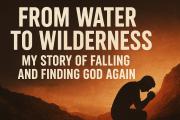
  • From Water to Wilderness: My Story of Falling and Finding God Again

    When I was baptized, I thought life with God would get easier. I thought peace would fill me every day. I thought I would suddenly become more disciplined, more faithful, more untouchable. I imagined I would walk out of that water as a new person, safe from the struggles that had chased me before.

    But that’s not what happened.

    Right after baptism, I was hit harder than ever. It was like the devil was waiting for me the moment I came out of the water.

    And you know what? That’s not strange. Even Jesus went through it. The Bible says:

    “Then Jesus was led by the Spirit into the wilderness to be tempted by the devil.”
    —Matthew 4:1

    Jesus’ baptism was followed by temptation. Mine was too. I just didn’t see it coming.


    Not long after, temptation came in like a flood. Lust filled my mind. I smoked for the first time. I cursed my own life. And in the darkest moments, I even cursed God.

    I couldn’t understand. Why would this happen after I gave my life to Him? I thought baptism was supposed to protect me from this.

    But the Bible says we are in a real fight:

    “We are not fighting against humans. We are fighting against forces and authorities and against rulers of darkness and powers in the spiritual world.”
    —Ephesians 6:12 (CEV)

    I was fighting, but I wasn’t ready. I thought I was strong. I thought I could handle it. But I was weaker than I believed.

    Living in Fear

    My choices started catching up to me. I became afraid, especially for my health. When I went in for a medical checkup, I was sure the results would be bad. I thought my smoking and reckless living had already destroyed me.

    But the results surprised me. They came back better than I expected.

    That moment shook me. I didn’t deserve mercy, but God gave it to me anyway.

    The Bible says:

    “If we are not faithful, He will still be faithful, because He cannot deny who He is.”
    —2 Timothy 2:13 (NCV)

    Even when I turned away from God, He never turned away from me. That truth broke me. Not because I was strong, but because I finally reached the end of myself.

    The Breaking

    Here’s what I learned: sometimes God lets us fall so we can see we can’t do this on our own.

    Before, I was proud. I thought I was a “good man” because I didn’t smoke, didn’t fall into certain sins, and lived clean. But deep inside, my heart was proud. My strength was in myself, not in God.

    Jesus once said:

    “Those who try to hold on to their lives will give up true life. But those who give up their lives for me will hold on to true life.”
    —Matthew 10:39 (NCV)

    I had to lose my idea of strength before I could find real life in Him.

    The Surrender

    I came to the end of myself and finally surrendered. Not with fancy words. Just broken, empty, desperate. I dropped to my knees and gave God everything I had left, which wasn’t much.

    And He met me there.

    Slowly, He began to rebuild me. He didn’t rebuild me with pride or with the false strength of “being good.” He rebuilt me with His grace.

    Paul wrote:

    “But the Lord said to me, ‘My grace is enough for you. When you are weak, my power is made perfect in you.’”
    —2 Corinthians 12:9 (NCV)

    I used to hide my weakness. Now I’ve learned: my weakness is where Christ shows His strength.


    Learning God’s Way

    God doesn’t always work the way we expect. I thought He would make me stronger by helping me keep my pride. But He broke that pride, because it was in the way.

    The prophet Jeremiah talks about how God is like a potter:

    “But the jar he was making did not turn out as he had hoped, so the potter crushed it into a lump of clay again and started over.”
    —Jeremiah 18:4 (NLT)

    That was me. I was the broken jar. But God didn’t throw me away. He started over.

    Serving Again

    As I surrendered, God gave me new strength. Not strength to boast, but strength to serve.

    He opened the door for me to work with the youth. I began giving more of myself than ever before. This time it wasn’t about proving I was a “good man.” It was about showing God’s love and giving back what He had given me.

    My life, which felt like it was slipping away, was placed back in His hands. And His hands are safe hands.

    Waiting Through the Storm

    I actually started writing this story a month ago. But every time I tried to finish, something got in the way. Another storm would rise. Another problem would hit.

    Now I understand why. God didn’t want me to write this story halfway through. He wanted me to wait until I could see His work more clearly.

    David wrote in the Psalms:

    “I waited patiently for the Lord. He turned to me and heard my cry. He lifted me out of the pit of destruction, out of the sticky mud. He set me on a rock. He made my feet steady.”
    —Psalm 40:1–2 (NCV)

    God used the waiting time to shape me, to strengthen me, to remind me He was in control.

    The Victory

    Now I can say this with confidence: the struggle was real, but so is God’s victory.

    I used to think strength meant not smoking, not falling, not slipping up. But true strength is not about what I can do. True strength is found in what God does through me.

    Yes, the devil attacked me hard after my baptism. Yes, I failed. But God’s grace was greater than my failure. His mercy was stronger than my weakness. His love pulled me back even when I pushed Him away.

    The Bible says:

    “My dear children, you belong to God, so you have already defeated these false prophets. This is because the One who is in you is greater than the one who is in the world.”
    —1 John 4:4 (NCV)

    That’s the truth I now stand on.

    My Final Words

    If you’ve been baptized and thought your struggles would end, but instead they got worse, you’re not alone. If you’ve fallen harder than ever before after giving your life to Jesus, you’re not the only one.

    Baptism doesn’t end the battle. It declares whose side you’re on. And when you declare for Christ, the enemy takes notice.

    But don’t be afraid. You don’t fight alone. God is with you, and He is greater.

    The struggle is real. The temptations are real. The breaking is real.

    But God’s victory is even more real.

    And that’s the story of my life, broken, rebuilt, and held by His grace.

    Love,
    Gabriel.


    Read more
  • Baptized in Pattaya: Finding God's Grace in a City of Sin

    Pattaya, Thailand, is a city with a reputation. Most people don’t think of God when they hear its name. They think of nightlife, sex tourism, and excess. They call it “Sin City.” But in the middle of that chaos, I experienced something holy. I got baptized.

    Yes — baptized in Pattaya.

    I’ve been a Christian for years. My faith has grown through Bible studies, fellowship, and prayer. But I had never taken the public step of baptism. Not because I didn’t believe. I did. But the timing never felt right. Life kept moving. I kept waiting. And then, God surprised me.

    A Trip That Turned Into a Spiritual Milestone

    When I went to Pattaya, it wasn’t for a baptism. I was there with my Bible friends. We knew about the city's reputation, but we also knew we weren’t going there to join in — we were there to be light. Even still, it felt ironic. This wasn’t the place I imagined making a deep spiritual commitment.

    But God’s ways don’t follow our logic.

    “For my thoughts are not your thoughts, neither are your ways my ways,” declares the Lord. — Isaiah 55:8

    One evening, during our time of fellowship and reflection, the idea of baptism came up. It hit my heart in a different way. There was no pressure. No hype. Just a quiet stirring from the Holy Spirit. I knew it was time.

    Baptism in a Place No One Expects

    We planned it for the beach but eventually did it in a pool. It was simple, honest, and unforgettable. Just a small group of believers, my spiritual family, standing in the middle of a city known for everything but God.

    And yet, God was right there.

    That moment in the water was powerful. Not because of where I was, but because of where I was. The contrast made it even clearer: God's grace doesn’t avoid broken places. It invades them.

    “The light shines in the darkness, and the darkness has not overcome it.” — John 1:5

    That baptism wasn’t just a public declaration of faith. It was a declaration of truth: God is not limited by location. His power reaches anywhere.

    God Doesn’t Wait for Perfect Conditions

    If I’ve learned anything, it’s this, God doesn’t wait for things to be clean, quiet, or convenient. He moves in the mess. He works in unexpected places. He meets people where they are and brings transformation on His terms.

    Pattaya is known for sex tourism, drinking, and parties, and yet, I saw Jesus there. Not just in my baptism, but in the worship we shared, the fellowship we had, the love that surrounded us. God was active in a place most people write off as spiritually dead.

    “Where sin increased, grace increased all the more.” — Romans 5:20

    If that doesn’t humble you, nothing will.

    You Never Know Where God Will Move

    Looking back, I see the beauty in God’s plan. I thought I needed a peaceful retreat or a quiet church altar to take this step. Instead, God chose a place known for everything opposite, and turned it into holy ground.

    Why? Because He can.

    That’s the point of grace. It doesn’t wait. It doesn’t ask for permission. It shows up, even in the heart of darkness, and does what only God can do.

    My baptism in Pattaya taught me something I’ll never forget:

    You never know where God will lead you, or how He’ll work when you get there.

    And maybe that’s exactly how it should be. Because then, it’s undeniably His doing. Not ours.

    “The wind blows wherever it pleases. You hear its sound, but you cannot tell where it comes from or where it is going.” — John 3:8

    That’s the Spirit. That’s God.

    And that’s my story.


    Read more

Latest Articles

Most Popular